


The Ultimate Guide to Achieving Financial Freedom: A Step-by-Step Roadmap
07 May, 2024

Christian Nussbaum
Table of Content
- Understanding Financial Freedom
- The Benefits of Financial Freedom
- Assessing Your Current Financial Situation
- Setting Financial Goals and Creating a Plan
- Maximizing Your Income and Creating Multiple Streams of Revenue
- How to Budget for Financial Freedom
- How to Invest for Financial Freedom
- Real-Life Success Stories
- Conclusion
Are you tired of living paycheck to paycheck, struggling to make ends meet, and feeling like you'll never achieve financial freedom? You're not alone. Many people find themselves trapped in a cycle of debt, financial stress, and limited options. However, the good news is that financial freedom is not a myth - it's achievable with the right mindset, strategies, and action plan.
In this comprehensive guide, we'll walk you through the steps to unlocking financial freedom and achieving your financial goals. Whether you're just starting your journey or you've been working towards financial independence for years, this post will provide you with valuable insights, practical tips, and real-life success stories to help you stay motivated and on track.
Understanding Financial Freedom
Before we dive into the strategies for achieving financial freedom, let's first define what it means. Financial freedom is the state of having enough passive income to cover your living expenses without having to rely on a traditional job. It means having the freedom to live life on your own terms, pursue your passions, and make choices based on your values rather than financial constraints.
Financial freedom is not about becoming rich overnight or winning the lottery. It's about creating a sustainable, long-term plan that allows you to gradually build wealth and achieve your financial goals. It requires discipline, patience, and a willingness to make short-term sacrifices for long-term gains.
The Benefits of Financial Freedom
Achieving financial freedom can have a profound impact on your life. Here are just a few of the benefits:
- Reduced stress and anxiety: When you're no longer worried about money, you can focus on the things that truly matter to you, such as your relationships, health, and personal growth.
- More time and flexibility: Financial freedom gives you the ability to choose how you spend your time. You can pursue hobbies, travel, volunteer, or spend more time with loved ones without the constraints of a traditional job.
- Improved relationships: Money is one of the top sources of stress in relationships. When you're financially free, you can avoid money-related conflicts and focus on building strong, healthy relationships.
- Greater sense of purpose: When you're not tied to a job for financial reasons, you can pursue work that aligns with your values and passions, leading to a greater sense of fulfillment and purpose.
Assessing Your Current Financial Situation
Before you can create a plan for achieving financial freedom, you need to have a clear understanding of your current financial situation. This involves taking an honest look at your income, expenses, debts, and assets.
Start by creating a budget that tracks your monthly income and expenses. Use this information to identify areas where you can cut back on spending and redirect that money towards your financial goals.
Next, make a list of all your debts, including credit card balances, student loans, car payments, and mortgages. Prioritize paying off high-interest debt first, as this will save you money in the long run.
Finally, take inventory of your assets, including savings accounts, retirement accounts, investments, and real estate. This will give you a clear picture of your net worth and help you identify opportunities for growth.
Setting Financial Goals and Creating a Plan
Once you have a clear understanding of your current financial situation, it's time to set financial goals and create a plan for achieving them. Your goals should be specific, measurable, achievable, relevant, and time-bound (SMART).
Examples of financial goals might include:
- Paying off all credit card debt within 2 years
- Saving 6 months' worth of living expenses in an emergency fund
- Investing 15% of your income for retirement
- Purchasing a rental property within 5 years
Create a timeline for each goal and break them down into smaller, actionable steps. This will help you stay motivated and on track.
Maximizing Your Income and Creating Multiple Streams of Revenue
One of the keys to achieving financial freedom is to maximize your income and create multiple streams of revenue. This can involve:
- Increasing your income at your current job: Look for opportunities to take on additional responsibilities, negotiate a raise, or pursue promotions.
- Starting a side hustle: Consider starting a business or freelancing on the side to generate additional income. This could be anything from selling products online to offering consulting services in your area of expertise.
- Investing in income-generating assets: Look for opportunities to invest in assets that generate passive income, such as rental properties, dividend-paying stocks, or bonds.
- Creating digital products: If you have knowledge or skills that others would find valuable, consider creating digital products such as ebooks, courses, or software that you can sell online.
How to Budget for Financial Freedom
Creating and sticking to a budget is crucial for achieving financial freedom. Here are some budgeting tips for beginners:
- Track your spending: Use a budgeting app or spreadsheet to track your income and expenses for at least one month. This will give you a clear picture of where your money is going.
- Identify areas for improvement: Look for areas where you can cut back on spending, such as dining out, entertainment, or subscriptions you don't use.
- Create a realistic budget: Based on your income and expenses, create a budget that allocates money towards your financial goals while still allowing for some flexibility and fun.
- Automate your savings: Set up automatic transfers from your checking account to your savings and investment accounts each month. This will help you stay on track and avoid the temptation to spend money earmarked for your goals.
- Review and adjust regularly: Review your budget and progress towards your goals regularly, and make adjustments as needed.
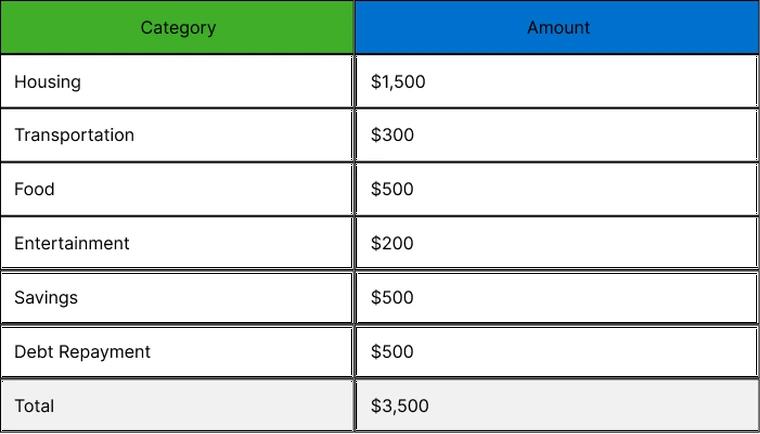
Sample Monthly Budget for Financial Freedom
How to Invest for Financial Freedom
Investing is a key component of achieving financial freedom, as it allows you to grow your wealth over time. Here are some tips for investing for financial freedom:
- Start early: The earlier you start investing, the more time your money has to grow through the power of compound interest.
- Educate yourself: Take the time to learn about different investment options, such as stocks, bonds, real estate, and mutual funds. Consider working with a financial advisor or taking a course on investing.
- Diversify your portfolio: Don't put all your eggs in one basket. Diversify your investments across different asset classes and sectors to minimize risk.
- Invest regularly: Set up automatic contributions to your investment accounts each month, and increase the amount as your income grows.
- Think long-term: Avoid the temptation to make emotional decisions based on short-term market fluctuations. Stick to your investment plan and focus on your long-term goals.
"Investing should be more like watching paint dry or watching grass grow. If you want excitement, take $800 and go to Las Vegas." - Paul Samuelson
Real-Life Success Stories
- Melinda, a 28-year-old marketing professional, paid off $50,000 in student loan debt in just 3 years by creating a strict budget, increasing her income through freelance work, and putting every extra dollar towards her debt.
- Brad and Dana, a married couple in their 40s, achieved financial independence by maxing out their retirement accounts, investing in rental properties, and living below their means. They now have the freedom to travel the world and pursue their passions.
- Mark, a 35-year-old entrepreneur, built a successful online business that generates passive income and allows him to work from anywhere in the world. He credits his success to his willingness to take calculated risks and his commitment to lifelong learning.
Conclusion
Achieving financial freedom is not a myth - it's a reality that anyone can achieve with the right mindset, strategies, and action plan. By assessing your current financial situation, setting clear goals, maximizing your income, budgeting wisely, and investing for the long-term, you can create a life of financial abundance and freedom.
Remember, the journey to financial freedom is not always easy, but it's worth it. Stay focused on your goals, surround yourself with supportive people, and celebrate your progress along the way. With persistence and dedication, you can unlock the door to financial freedom and live life on your own terms.
Financial Frontier: Your Guide to Smart Money Management
Newsletter
Receive Our Newsletter in your inbox every week.
© 2026 Financial Frontier, All right reserved.