

Predicting the Future: Tools and Indicators for Anticipating Crypto Market Cycles
22 March, 2024

Christian Nussbaum
Introduction
Understanding the Importance of Predicting Crypto Market Cycles
Predicting crypto market cycles is essential for making informed investment decisions in the highly volatile cryptocurrency market. By understanding the tools and indicators used to anticipate these cycles, investors can mitigate risks and maximize returns. This comprehensive guide delves into the various tools and strategies for predicting crypto market cycles, ensuring a balanced and insightful approach.
Understanding Crypto Market Cycles
What Are Crypto Market Cycles?
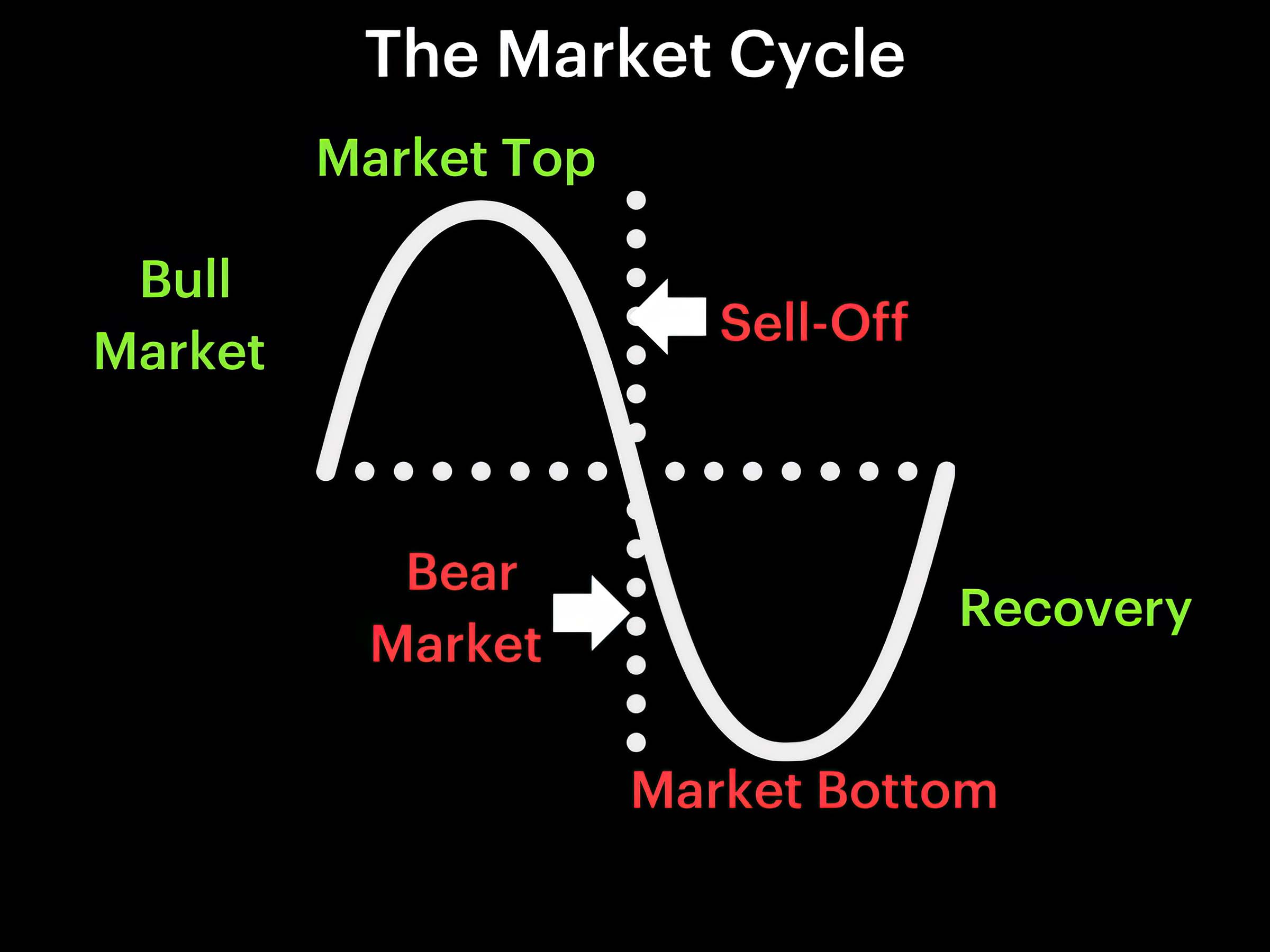
Crypto market cycles refer to the recurring phases of bullish and bearish trends in the cryptocurrency market. These cycles can be broken down into four main phases:
- Accumulation Phase: Characterized by low prices and relatively low trading volumes. This phase often follows a market downturn and is marked by smart money entering the market.
- Mark-Up Phase: Prices begin to rise, and trading volumes increase as more investors enter the market. This phase is driven by growing optimism and news of positive developments.
- Distribution Phase: Prices reach a peak, and trading volumes remain high. Savvy investors start to sell their holdings, anticipating a downturn.
- Mark-Down Phase: Prices decline, and trading volumes decrease. This phase signifies a bearish market trend, often leading back to the accumulation phase.
Comparison with Traditional Market Cycles: While traditional market cycles also exhibit these phases, the cryptocurrency market is often more volatile and influenced by technological advancements and regulatory changes.
Why Do Crypto Market Cycles Occur?
Several factors influence crypto market cycles, including:
- Investor Sentiment: Public perception and investor psychology play a significant role in driving market cycles.
- Technological Advancements: Innovations in blockchain technology and new cryptocurrency projects can impact market trends.
- Regulatory Changes: Government regulations and policies can either positively or negatively affect the market.
Historical Examples: Notable crypto market cycles include the Bitcoin boom of 2017, followed by the significant downturn in 2018, and the resurgence in 2020-2021.
Tools for Predicting Crypto Market Cycles
Technical Analysis Tools
Moving Averages
Simple Moving Average (SMA) and Exponential Moving Average (EMA): SMAs and EMAs are essential for identifying long-term trends. SMAs calculate the average price over a specified period, while EMAs give more weight to recent prices, making them more responsive to price changes.
Using Moving Averages: Traders often use the 50-day and 200-day moving averages to spot bullish (Golden Cross) and bearish (Death Cross) signals.
Relative Strength Index (RSI)
Explanation of RSI: The RSI measures the magnitude of recent price changes to evaluate overbought or oversold conditions. It ranges from 0 to 100, with values above 70 indicating overbought conditions and below 30 indicating oversold conditions.
Using RSI: Traders use RSI to identify potential reversal points and confirm trends.
Bollinger Bands
Explanation of Bollinger Bands: Bollinger Bands consist of a moving average and two standard deviation lines. They help assess market volatility and potential price movements.
Using Bollinger Bands: When prices move outside the bands, it indicates high volatility and potential price reversals.
MACD (Moving Average Convergence Divergence)
Explanation of MACD: MACD is a trend-following momentum indicator that shows the relationship between two moving averages. It consists of the MACD line, the signal line, and the histogram.
Using MACD: Crossovers between the MACD line and the signal line can indicate buy or sell signals, while the histogram shows the strength of price movement.
Fundamental Analysis Tools
On-Chain Analysis
Definition and Importance: On-chain analysis involves examining blockchain data to understand market behavior. Key metrics include transaction volume, active addresses, and the network value to transaction (NVT) ratio.
Using On-Chain Metrics: High transaction volumes and active addresses often indicate increased market activity and interest.
Market Sentiment Analysis
Importance of Market Sentiment: Understanding market sentiment helps in predicting market movements. Positive sentiment can drive prices up, while negative sentiment can drive them down.
Tools for Sentiment Analysis: Tools like social media analysis, sentiment indicators, and Google Trends can gauge public sentiment.
Project Fundamentals
Evaluating Projects: Assess the team, technology, partnerships, whitepapers, and roadmaps of cryptocurrency projects to determine their potential impact on the market.
Sentiment Analysis Tools
Social Media Monitoring Tools
Tracking Social Media Trends: Tools such as Google Trends and Twitter sentiment analysis can provide insights into public interest and sentiment.
Impact on Market Cycles: Social media trends can significantly influence market cycles by affecting investor behavior.
News and Media Tracking
Staying Updated: Keeping up with news and media is crucial for understanding market dynamics. Tools like Feedly and Google Alerts can help track relevant news.
Influence on Market Sentiment: News events can have a profound impact on market sentiment and price movements.
Indicators for Anticipating Market Cycles
Leading vs. Lagging Indicators
Definition and Differences: Leading indicators predict future price movements, while lagging indicators confirm trends after they have occurred.
Examples:
- Leading Indicators: RSI, MACD, Fear and Greed Index.
- Lagging Indicators: Moving averages, trading volume.
Key Indicators to Watch
Trading Volume
Impact on Price Movements: High trading volume often precedes significant price movements, indicating strong interest and momentum.
Volume Analysis: Analyzing volume trends can help identify market cycles and potential reversals.
Market Capitalization
Understanding Market Cap: Market cap reflects the total value of a cryptocurrency. It helps gauge the size and health of the market.
Market Cap Analysis: Comparing the market cap of different cryptocurrencies can provide insights into market dynamics.
Fear and Greed Index
Explanation and Significance: The Fear and Greed Index measures market sentiment on a scale from 0 to 100, with 0 indicating extreme fear and 100 indicating extreme greed.
Using the Index: Investors use the index to gauge market sentiment and make informed decisions.
Whale Activity
Understanding Whale Activity: Whales are large holders of cryptocurrencies. Their buying and selling activities can significantly impact the market.
Tracking Whale Movements: Tools like Whale Alert and Whale Map help track large transactions and predict market movements.
Strategies for Using Tools and Indicators
Combining Tools for Comprehensive Analysis
Integrating Different Analyses: Combining technical, fundamental, and sentiment analysis provides a holistic view of the market. This balanced approach enhances the accuracy of predictions.
Adapting Strategies Based on Market Phases
Tailoring Strategies: Different phases of the market cycle require different strategies. For example, accumulation phase strategies may focus on identifying undervalued assets, while distribution phase strategies may involve profit-taking.
Case Studies of Successful Predictions
Real-World Examples: Highlighting successful market predictions can provide valuable insights. For instance, the accurate prediction of the 2017 Bitcoin bull run by several analysts demonstrated the effectiveness of combining various tools and indicators.
Lessons Learned: Successful investors often emphasize the importance of continuous learning and adapting strategies based on market conditions.
Practical Tips for Investors
Staying Informed and Updated
Continuous Education: Staying updated with the latest market trends and news is crucial. Recommended sources include blogs, podcasts, and newsletters like CoinDesk, CryptoSlate, and The Pomp Podcast.
Risk Management Strategies
Importance of Risk Management: Risk management is vital in the volatile crypto market. Techniques include diversification, stop-loss orders, and position sizing.
Avoiding Common Pitfalls
Common Mistakes: Avoiding common mistakes such as emotional trading, lack of diversification, and ignoring market trends can improve investment outcomes.
Tips for Discipline: Maintaining a disciplined investment approach involves setting clear goals, following a strategy, and sticking to risk management principles.
Conclusion
The Future of Crypto Market Predictions
Emerging Trends: The future of crypto market predictions will likely involve advanced tools and technologies. AI and machine learning are expected to play a significant role in enhancing prediction accuracy.
Final Thoughts
Summary: Predicting crypto market cycles requires a comprehensive understanding of various tools and indicators. By staying informed and using these tools wisely, investors can make better investment decisions.
Encouragement: Embrace continuous learning and adapt to market changes for successful crypto investments.
Additional Resources
Recommended Reading and Tools
Books and Articles:
- "Mastering Bitcoin" by Andreas M. Antonopoulos
- "The Bitcoin Standard" by Saifedean Ammous
Online Courses:
- Coursera's "Bitcoin and Cryptocurrency Technologies"
- Udemy's "Cryptocurrency Investment Course 2024: Fund Your Retirement!"
Tools and Platforms:
FAQs
Frequently Asked Questions
What is the best tool for predicting crypto market cycles?
- There is no single best tool. A combination of technical, fundamental, and sentiment analysis tools provides the most comprehensive insights.
How often should I check market indicators?
- It depends on your investment strategy. Long-term investors might check weekly, while short-term traders might check daily.
Can market cycles be predicted with 100% accuracy?
- No, predictions are never 100% accurate due to market volatility and external factors.
What are the risks involved in relying on market predictions?
- Risks include market volatility, inaccurate predictions, and unforeseen events. Always use risk management strategies.
By following this comprehensive guide, investors can enhance their ability to predict crypto market cycles, ultimately leading to more informed and profitable investment decisions.
Financial Frontier: Your Guide to Smart Money Management
Newsletter
Receive Our Newsletter in your inbox every week.
© 2026 Financial Frontier, All right reserved.